
New Energy Industry Solutions
Laser Welding MachineLaser Processing Solutions for the New Energy IndustryLaser processing technology, with its high precision, high efficiency, high flexibility, and non-contact "clean" machining characteristics, is becoming a core manufacturing method driving technological upgrades, cost reduction, and effi...
Solution Details:
Laser Processing Solutions for the New Energy Industry
Laser processing technology, with its high precision, high efficiency, high flexibility, and non-contact "clean" machining characteristics, is becoming a core manufacturing method driving technological upgrades, cost reduction, and efficiency gains in the new energy industry. It provides advanced solutions for key sectors such as photovoltaics (PV), power batteries, hydrogen energy, and lightweighting of new energy vehicles.
I. Photovoltaic Cell Manufacturing
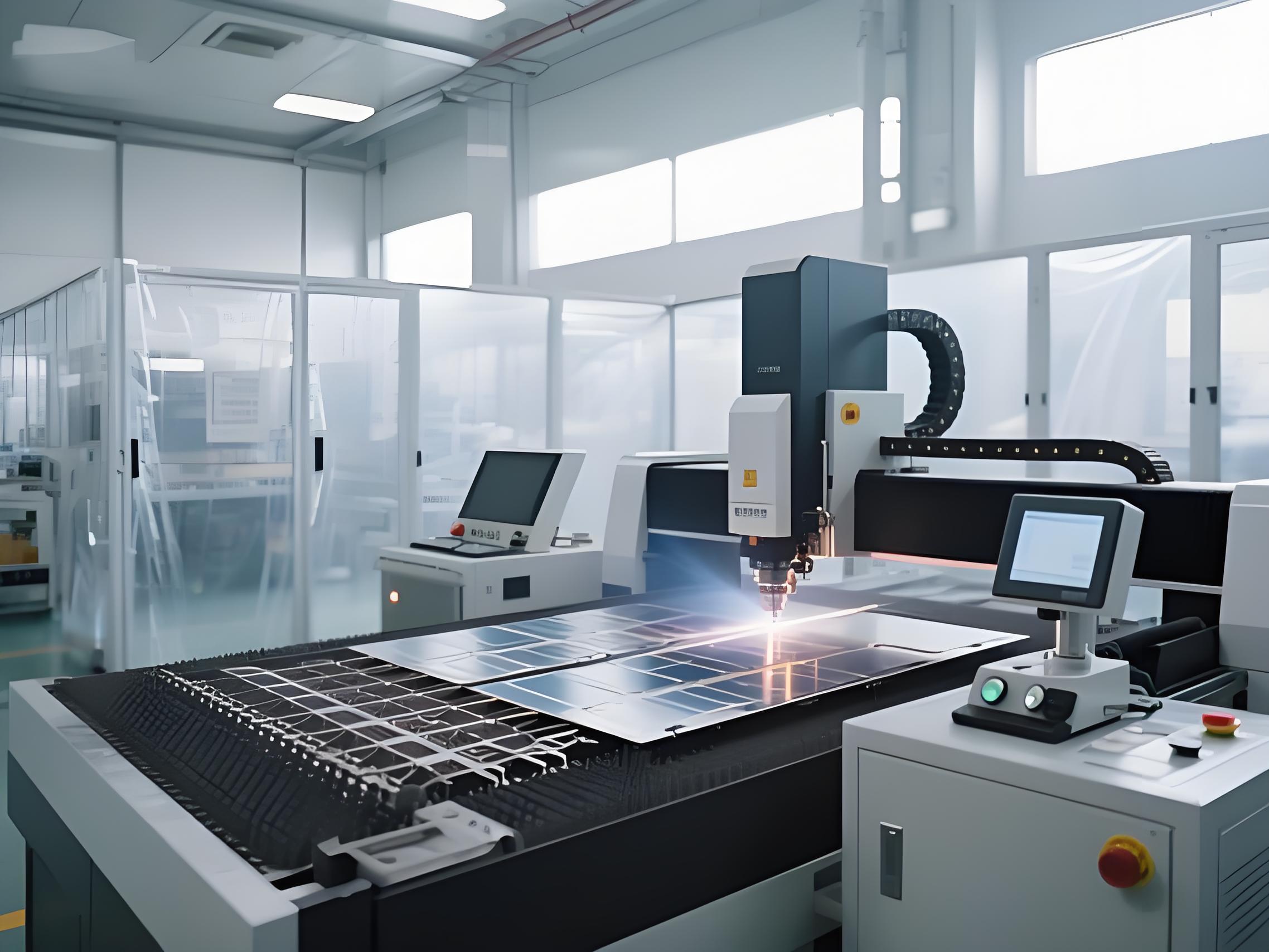
Laser technology is a key process for efficient solar cells, from wafers to modules.
High-Efficiency PERC/TOPCon Cells: Utilizes ultrafast lasers (picosecond/nanosecond) for high-quality, low-damage rear-side passivation layer grooving and laser doping, precisely controlling carrier transport paths. This is one of the core processes for improving cell conversion efficiency.
Perovskite & Thin-Film Cells: Used for patterning amorphous silicon layers (P1/P2/P3) in heterojunction cells, precise etching of perovskite layers, and contour cutting of flexible substrates. The minimal heat-affected zone effectively prevents material delamination and performance degradation.
Module Assembly: Laser scribers cut cells into required specifications with smooth, chipping-free edges. Laser welders replace traditional tabbing string soldering, achieving high-reliability interconnection of ultra-fine grid lines and copper foil, reducing resistive losses. They are also used for precision welding of module frames.
II. Power Battery Manufacturing
Laser welding and cutting are decisive technologies ensuring the safety, consistency, and production efficiency of power batteries.
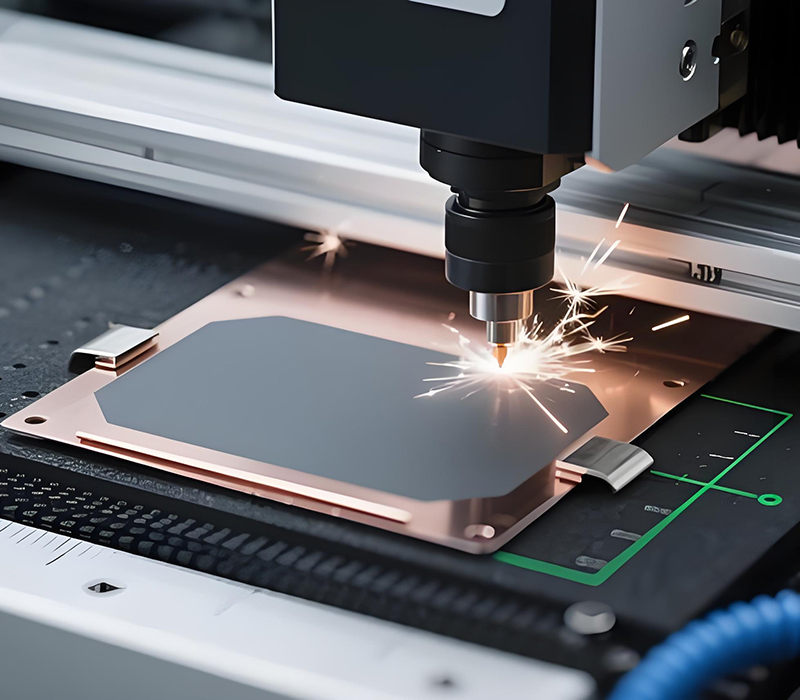
Cell Manufacturing: Used for precision welding of tabs (positive/negative electrode leads, including copper-aluminum dissimilar material welding), sealing pin (fill port) welding, and battery vent welding. This requires welds with good sealing, high strength, low resistance, and no spatter.
Module & Pack Integration: Handles high-speed welding of battery module busbars and deep penetration welding of battery pack enclosures (primarily aluminum or steel) and cooling plates. The stability and consistency of laser welding are key to ensuring the overall structural strength and electrical safety of the battery pack.
Electrode & Separator Processing: High-power ultrafast lasers are used for electrode sheet cutting (tab forming) of anode/cathode coatings, with burrs controllable at the micron level, significantly reducing the risk of internal short circuits. They are also used for precision cutting and drilling of separators.
III. Hydrogen Energy Equipment Manufacturing
Laser processing provides high-quality manufacturing solutions for core equipment like electrolyzers, fuel cells, and high-pressure hydrogen storage vessels.
Electrolyzer Bipolar Plates: Used for high-speed, precision cutting and surface treatment of flow channels on stainless steel or titanium alloy bipolar plates. It offers high processing efficiency and no burrs, ensuring flow channel geometric accuracy to optimize reactive gas distribution.
Fuel Cell Metal Bipolar Plates: Performs precision cutting and welding of flow channels on ultra-thin metal sheets (typically stainless steel, below 0.1mm thickness). Extremely high precision is required, directly impacting the performance and lifespan of the fuel cell stack.
High-Pressure Hydrogen Storage Cylinders: Laser welding is used for reliable connection of the valve seat to the liner/outer layer and for pre-treatment of the liner (e.g., cleaning, roughening) before carbon fiber winding. Welds must possess extremely high fatigue strength and sealing.
IV. New Energy Vehicle Lightweighting
Laser technology is central to achieving efficient joining in multi-material mixed body structures.
Aluminum/Steel Body Welding: High-power fiber lasers are used for remote laser welding, laser brazing, and laser fusion welding of aluminum-steel hybrid structures in doors, side panels, floor panels, etc., achieving high-strength, low-deformation joints that significantly enhance body rigidity and safety.
Battery Pack Enclosures & Chassis: Used for high-speed, deep penetration welding of large structural components like aluminum alloy battery pack enclosures, integrated die-cast rear floor panels, and front/rear crash beams, meeting the strength and sealing requirements of lightweight design.
Summary: Laser processing solutions are deeply integrated into various manufacturing stages of the new energy industry chain. Through its precise, efficient, intelligent, and highly flexible processing capabilities, it directly addresses the industry's core demands for improving energy conversion efficiency, ensuring extreme safety, reducing manufacturing costs, and enabling material innovation. It serves as a vital technological engine driving the transformation of energy production and utilization.
Contact Us
We’d love to hear from you, and we promise no spam